Showing posts with label money. Show all posts

Wednesday, January 5, 2022

What Would You Do With $1,000?

 One thousand dollars can seem to be a lot of money, when you have no money.


I am in the happy position where I can lay my hands on a thousand dollars, just at the click of a mouse button.


I am not talking in terms of credit cards nor am I talking of home equity lines of credit.  I have several tens of thousands invested.  This has come to me over the past fifteen years, but I have invested since the late 1970's.  To read how I built an investment stream that pays me daily you can read "Creating a Dividend Ladder""
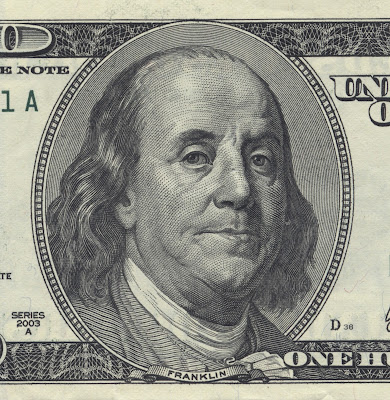
 

Benjamin Franklin image from a $100 bill

One thousand Dollars is just ten Benjamin's 


That will not buy you much on it's own. I am talking for myself here, $1,000 can pay your rent, in part, for a month, buy you a month worth of food, pay off part of a loan. But for me, I would look to invest it.

So what would I invest it in?


I would look to my M1 Finance account. There I could invest it in a multitude of companies.


I have a portfolio of 100 company stocks and Exchange traded funds.


You can see my portfolio as it stands today at My Dividend Portfolio. If you use this link to open an account, you will receive a bonus of around $30 sometimes up to $50. I will also receive a commission for introducing you , this is at no cost to you.


I could also buy about two Vanguard S&P 500 Exchange Traded Fund shares ( VOO ). This holds all of the top 500 companies in the U.S. stock market in a very low cost Exchange Traded Fund. It therefore guarantees at least near market returns, plus some quarterly returns in the form of dividends.


So for me investment is where I put all of my income. Then I use the proceeds of the investments to pay for day to day expenses.


Some of the spare change, if I have any, would go to possibly investing in either California Municipal Bonds, these are reasonable payers of regular monthly dividends, but have the bonus of being free of income tax since I live in California.


I might also put some in to Crypto currencies like Bit coin or Etherium, I have an account at Block Fi where I stake some of these coins to receive a monthly interest payment.  You can receive $10 in free Bitcoin when you open a Block Fi account using my link here. Get $10 of Bitcoin when you open a Block Fi account here.


Please support my Blog by taking a look at My Amazon Store, if you make any purchase I may receive a small commission at no extra cost to you.

Monday, November 15, 2021

How to Create a Dividend Income Ladder From Scratch.

 One of the commonest complaints I hear from people about dividend investing is "But I would only receive occasional income from dividends. What do I do between dividend payments to make money?"


Well of course, in the United States most dividends are paid quarterly. in other parts of the world you receive only semi-annual dividends every six months or so.

Dividend ladder, a ladder  on a plain white background, rising from bottom left to top right, wooden ladder image


One of the first investing tricks I learned back in the 1970's at the very beginning of my investing career was to create a dividend ladder.


With a dividend ladder you can create a sequence of dividend checks coming in, almost daily.   I personally receive on average more than seven dividend payments per day.


March, June, September and December still actually see me me receiving more dividends than any other months. But this is just a product of the way U.S. Corporations pay their dividends.  I still receive dividends most week days.


How I begin creating a Dividend Ladder:


First of all, the dividend ladder only works if you use dividend paying stocks and Interest paying Bond funds. You can include growth stocks if you wish, but they will not contribute to dividend income for some time, if ever.


I begin with a framework.  In the last few days of a month, many Mutual funds and ETF pay a dividend. While some companies, Coca Cola ( KO ), Aflac (AFL ) and Allstate Insurance (ALL ) like to pay on the first day of the month.  So one can mix in some monthly paying Mutual Funds and blue chip single company dividends here, choosing companies which pay on the first day of different months helps . So Allstate pays in June, Cocac cola pays in July, Verizon (VZ ) pays in August, then back to Allstate to repeat the cycle.


Week two of the month can be a little sparse, unless you have some Bond funds, Bond funds generally pay out around the seventh of the month.  


There is often a quiet period until about the fifteenth of the month when many monthly paying Real estate investment trusts (REITs ) pay out, One might also include Business development corporations here too BDC likn Main Street Capital ( MAIN ) pay out at this time.


The third week of the month or beginning of the last week sees the paying of dividends from many covered call investment companies.  They generally pay about one week adter the monthly options period closes, that is the third Friday of the month.


After one has created this frame of investments which will pay you a regular monthly income, one only needs to fill in the gaps with dividend paying stocks.


It is a simple method of generating almost daily income from periodic payments.


Build a Dividend Ladder with M1 Finance. Get a Bonus when you start investing.


 With M1 Finances automatic investment program you can set your investments and almost forget.  M1 Finance will reinvest the dividend income into your pre-selected stocks to automatically keep your portfolio balanced in the way you wish.


Your dividend ladder can grow and grow with little effort from you.


As your dividend ladder starts, you only see small increases in dividends at first.  But if you continue to add a little new money, your investment grows, increasing your dividends.  This effect is often call the "Dividend Snowball"  Before long your dividends can be in the tens of dollars per month.


For instance, I opened my account with M1 Finance on January 15, 2020.  I began with just $100, I added $10 per week. My first dividend came just three weeks after opening the account, I received 1 cent from the LQD Corporate bond fund. Afew days later other dividends began to come in.   Today in November 2021, I have earned over $102 in dividends. and my account has grown to over $4,600.  In the next year I expect to earn $12 per month, that is for doing nothing but, monitoring a portfolio occasionally and adding a dew dollars per week.


Amazing.  The power of investing in dividend paying stocks.


Thanks for reading.  I hope that you might try to create a dividend ladder from scratch.


This post has a follow up:  Do Dividend Ladders Still Work in 2026 you can read it here

Wednesday, January 15, 2020

Investing For Income

Why Invest For Income?

For me. investing is all about creating cash flow and income.
If I did not receive a return on my assets without having to do more work, then I would not bother with investing.

It is all well to invest in Google, Tesla or Amazon. They may be good stocks, at least two of them are, and I do own some Google and Amazon stock.
stacks of $100 bills, cash flow from dividends can soon build wealth
Cash Flow is King

But non of these stocks pay a dividend. Did I say that I love dividends?

Well most of my portfolio is made up of stock paying a dividend some monthly, some quarterly, some every six months or so and some only pay once per year. But I love that cash flow that comes with a dividend.

I hate wondering if I need to think about selling a stock. Has it made enough money for me? Is it distorting my portfolio? Is it time to rebalance? Questions? Questions? Questions?

With a dividend stock I can buy more with a dividend re-investment plan (DRIP). I can take cash and re-distribute that cash into other stock, or I can take the cash and spend it.

Love it!

How do I choose a dividend stock?


First I look for a stock that is making a positive cash flow, and has done so over several quarters or years.

Then I look at the current yield of the stock. All dividend stocks show a yield in respect to their current share price. I like a 1.5 to 3.2 percent current yield.


You do not want to get carried away with a dividend yield. Too high can mean that a stock is too low in price, so may have other issues or it may be funding its dividend by borrowing.

The 1% to 3% area is a sweet spot. Giving a company a chance to grow its dividend and not stretching its income too much and there by giving it cash to grow its bottom line.

Most dividends are just a few cents per share, most of my stock pays in the region of 40 cents per share, but do not concern yourself with that. Buy ten shares paying 40 cents and you earn $4 or 100 shares and a dividend of $40 will be winging its way into your pocket or portfolio.  Compunding is the key here.


Lots of 1 cents make up a dividend income of $1,000 in time. I earn several thousand dollars from my income in dividends per year. Enough to make a car payment every month, or keep me in Starbucks coffee every day. But at the moment I prefer just to re-invest the cash back into more stock.

I generally do not concern myself with daily fluctuations of the stock market. If I need another $10 in a particular month I add to a stock paying in that month or one paying the $10 over the year.

As time passes you find that your dividend yield over cost is what matters, not the current yield.

For instance You buy a stock yielding 2% it increases its dividend annually, the stock price rises, but the yield on a daily basis falls. The stock you bought initially will still be paying you 2% and subsequent purchases will change your overall percentage yield over time, the stock always pays you the yield at the time of purchase. Buying over the long term and holding means that you have little bundles of stock paying 2%, 1.8%, 6%, 0.9% and so on so your yield on cost could grow.

At present I have one portfolio paying a 4.32% yield on cost where the average yield is only 2.65%. Just because some of the stock was bought back in 2008 when stock price were low and yields jumped for many stocks during the Financial Crisis.